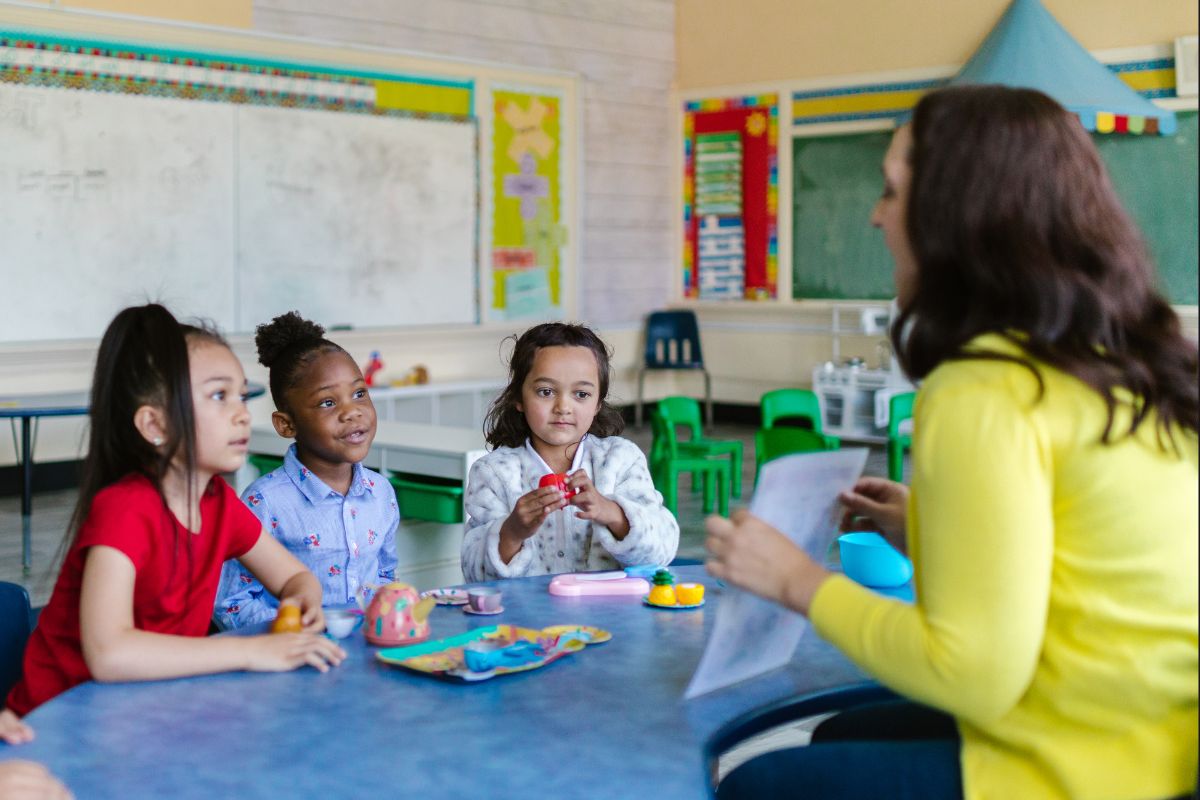
Children are not born with adult-style focus. Their attention grows through movement, language, sleep, curiosity, emotional safety, and repeated practice. This is why one child may concentrate deeply on pouring water for ten minutes, yet struggle to sit still during a long explanation. Attention is not a single skill. It is a developing system that helps children notice, choose, ignore distractions, and stay with meaningful work.
Parents and educators often want a simple way to understand focus, especially as children move between hands-on learning and screens. Carefully used online cognitive tests can offer a small snapshot of reaction time, memory, attention, and perception, but they should never replace observation, play, classroom work, or conversations with children.
Quick Summary
Attention in children develops gradually as the brain learns to manage impulses, filter distractions, and stay engaged. Montessori principles support this growth through purposeful activity, freedom within limits, movement, repetition, and calm learning spaces.
What Attention Really Means
Attention is often treated as the ability to sit quietly, but that is too narrow. A child can be very focused while building a tower, sorting shells, tracing letters, or washing a table. True concentration means the child is mentally engaged, choosing actions with intention, and returning to the task even after small interruptions.
Scientists often describe attention as a set of related processes. Selective attention helps a child focus on one sound, object, or instruction. Sustained attention helps them stay with a task over time. Executive attention helps them pause, plan, and resist impulses. These skills are still developing throughout childhood, which explains why young learners need structure, patience, and many chances to practice.
Montessori education has long valued deep concentration as a sign of healthy development. The prepared environment, practical life materials, and freedom to repeat tasks are designed to help children build attention from the inside out. This connects closely with early brain development, where repeated experience helps strengthen useful neural pathways.
The Brain Systems Behind Focus
Several parts of the brain work together when a child concentrates. The prefrontal cortex supports planning, impulse control, and decision-making. The parietal regions help direct attention toward important information. The sensory systems take in sights, sounds, touch, and movement. The emotional centers of the brain also matter, because stress, fear, hunger, or fatigue can pull attention away from learning.
This is why concentration is not only a mental issue. A tired child may look distracted because the brain is conserving energy. A child in a noisy classroom may struggle because the sensory load is too high. A worried child may seem unmotivated when their nervous system is busy scanning for safety. Focus improves when the whole learning setting supports the child.
| Attention Skill | What It Looks Like | How Adults Can Support It |
|---|---|---|
| Selective attention | Listening to one instruction while ignoring background noise | Reduce clutter, use clear language, and offer one task at a time |
| Sustained attention | Staying with a puzzle, book, or practical activity | Allow enough uninterrupted time for meaningful work |
| Executive attention | Waiting, planning, correcting mistakes, and trying again | Model calm problem-solving and avoid rushing the child |
Why Montessori Environments Help Children Concentrate
A Montessori classroom is built around the idea that children concentrate best when the environment is orderly, beautiful, and matched to their developmental stage. Materials are placed where children can reach them. Activities have a clear beginning, middle, and end. Children can choose work, repeat it, and return it to its place. These small details reduce mental friction.
Choice also matters. When children choose purposeful work, attention often lasts longer because the task has personal meaning. Freedom does not mean chaos. Montessori freedom sits inside clear limits, such as using one material at a time, respecting others, and completing the work cycle. This balance helps children practice independence without being overwhelmed.
Everyday Factors That Shape Attention
Attention changes from day to day. Adults may assume a child is careless, but the cause may be physical, emotional, or environmental. A child who focused beautifully yesterday may struggle today because of poor sleep, illness, a rushed morning, or too much stimulation. Looking for patterns is more useful than judging one moment.
- Sleep: Tired children often have weaker impulse control and shorter attention spans.
- Nutrition: Hunger or irregular meals can make steady focus harder.
- Movement: Children often concentrate better after climbing, carrying, walking, or stretching.
- Emotional safety: Calm relationships help the brain stay ready for learning.
- Task fit: Work that is too easy or too difficult can lead to restlessness.
Digital tools can also affect attention depending on how they are used. Fast-changing content may train children to expect constant novelty, while slow, purposeful activities encourage patience. The goal is not to reject technology completely, but to use it with care. A balanced approach is reflected in digital tools in Montessori, where technology supports learning rather than taking over the child’s experience.
How Concentration Grows Through Practice
Children build attention through repeated cycles of effort and satisfaction. A three-year-old may begin with a short pouring activity. Later, that same child may spend longer washing dishes, arranging number rods, or tracing sandpaper letters. The work becomes more complex, but the underlying process is the same: choose, begin, repeat, correct, complete, and restore order.
Adults can support this growth by protecting concentration once it appears. It is tempting to praise, question, or interrupt a focused child, especially when their work is impressive. Yet even positive interruptions can break the flow. Quiet observation is often better. The child learns, “I can stay with this. My work matters. I can finish.”
Practical Ways to Support Focus at Home and School
Strong attention is not built through pressure. It grows through rhythm, respect, and well-designed activity. Children need chances to do real things with their hands, make small decisions, and experience the satisfaction of completing work.
- Create predictable routines.
Regular rhythms reduce decision fatigue. A child who knows what comes next can settle more easily into work, meals, rest, and play. - Offer fewer choices.
Too many options can scatter attention. Two or three meaningful choices are often enough, especially for younger children. - Use hands-on tasks.
Practical activities such as folding cloths, watering plants, sorting buttons, or preparing snacks help children coordinate movement and thought. - Protect quiet work time.
Children need uninterrupted periods to enter deep concentration. Short, fragmented activity can prevent focus from fully forming. - Match challenge to ability.
The best tasks are slightly difficult but still possible. This keeps the child interested without creating frustration.
What Adults Should Observe
Observation is one of the most useful tools in understanding attention. Instead of asking only whether a child can focus, ask what kind of focus appears, when it appears, and what supports it. Some children focus best in the morning. Others need movement first. Some prefer quiet individual tasks, while others engage deeply through language and collaboration.
Useful observations include how long the child stays with a task, how they respond to mistakes, whether they repeat the activity, and how they react after finishing. A child who repeats work many times is not wasting time. Repetition helps the brain refine movement, memory, and control. Montessori educators often see repetition as a sign that the child is meeting an inner developmental need.
Attention Is Not the Same as Obedience
A quiet child is not always concentrating, and an active child is not always distracted. Some children sit still while their minds drift. Others move while thinking deeply. This distinction matters because adults may reward surface behavior and miss real engagement.
Children also differ in temperament. Some are naturally cautious and steady. Others are energetic and novelty-seeking. These differences do not mean one child is better prepared to learn. They mean adults must design environments that help each child practice self-regulation. The CDC’s overview of child development also shows that developmental skills unfold over time, with wide variation between children.
When Attention Challenges Need More Support
Occasional distractibility is normal. Concern grows when attention difficulties are persistent, intense, and interfere with learning, relationships, or daily routines. A child who cannot complete simple tasks, follow age-appropriate instructions, sleep well, or manage impulses may need closer support from parents, teachers, or health professionals.
The first step is usually not a label. It is careful information gathering. What happens at home? What happens in the classroom? Does the child focus during preferred activities? Are there sleep issues, hearing concerns, stressors, or sensory sensitivities? A broad view prevents adults from reducing a complex child to one behavior.
The Quiet Science of Growing Focus
Attention and concentration in children are shaped by the brain, the body, the environment, and the relationships around them. The science is clear on one point: focus develops. It is not simply present or absent. Children grow into it through meaningful work, calm guidance, movement, repetition, and time.
Montessori education supports this process by treating concentration as a natural human capacity that can be protected and strengthened. A child absorbed in a simple task is doing more than staying busy. They are practicing control, patience, perception, memory, and independence. That is the real science behind attention, and it begins in the small moments adults often overlook.