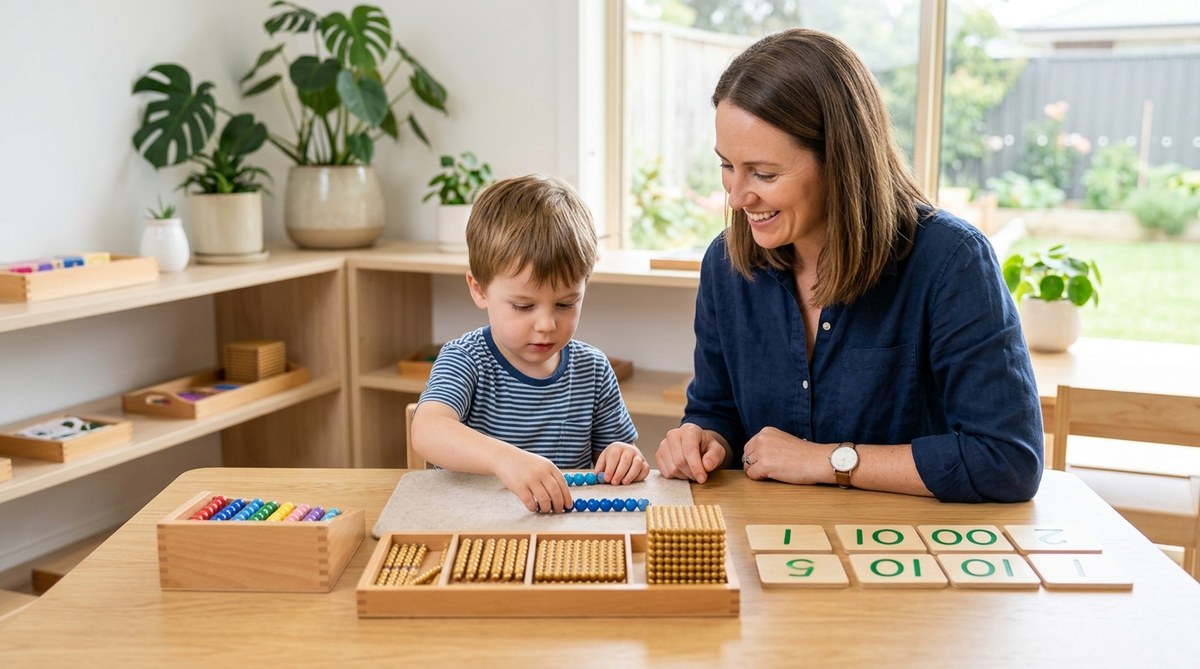
Montessori math materials can feel mysterious if you are new to the approach. Yet many parents discover that when children interact with hands on tools, math becomes a language the child explores with delight rather than a subject to fear. At Montessori Scientific Research, we blend classroom wisdom with the latest science to help families and educators understand how these materials support self directed learning, respect for individuality, and steady academic growth. This guide explains what the main Montessori math materials are, why they matter, and how you can implement a practical at home plan that aligns with research based principles.
The Montessori Approach to Mathematics
Montessori education views math not as a collection of abstract symbols but as a living set of concepts the child discovers through direct manipulation of concrete materials. The ground rules are simple:
– The child leads the activity within a prepared environment.
– Learning unfolds through sensory experiences that gradually bridge concrete experiences to abstract thinking.
– Each material has a precise purpose and a clearly defined sequence.
– Respect for the child’s pace means allowing time for repetition and self correction.
These ideas align with modern research on self directed learning and individualized growth. When a child has control over their learning moment, focus and motivation tend to stay higher. The math journey in a Montessori classroom is designed to be joyful, not pressured, and the materials are sequenced to reinforce understanding at each step.
Concrete to Abstract: The Classroom Progression
A hallmark of Montessori math is moving from concrete manipulatives to abstract symbols. The progression usually follows a predictable path:
– Start with sensorial experiences that prepare the mind to notice number sense and quantity.
– Introduce concrete materials that embody arithmetic ideas (for example beads for counting and operations).
– Gradually replace the concrete materials with symbols and mental strategies.
This progression mirrors how children naturally learn language by first listening and speaking before writing. In math, it helps children build robust mental representations before they are asked to perform operations on paper.
Key Tools in a Montessori Math Kit
Although every classroom has its own flavor, there are several core tools you will often see. Each tool has a specific purpose and a clear sequence, making it easier for families to reproduce or adapt at home.
- Bead materials: The golden beads and color coded bead chains embody the decimal system and basic operations. They provide a visual and tactile sense of units, tens, hundreds, and thousands.
- Number rods and spindle boxes: These tools help children connect quantities with numerals and begin simple operations without relying on counting out loud.
- Ten boards and hundred boards: These are visual anchors for understanding place value and the base ten structure.
- Operation materials: Simple tools such as addition strip boards, subtraction dot cards, and bead stair toys support early arithmetic while keeping the process concrete.
- Story and language supports: Phrase cards and number words help children link language with numbers, which research indicates supports early mathematical understanding.
What you choose to put on a home shelf should support the child’s current level and follow a logical sequence. The goal is clarity and repetition rather than variety for its own sake.
The Five Groups of Montessori Math Exercises
In the primary Montessori framework, there is a classic progression that organizes activities into five groups. Each group builds a specific mathematical concept, and children move through them as readiness and confidence develop.
- Group 1: Numbers to ten
- Focus on quantity sense, one to one correspondence, and early numeral recognition.
-
Activities emphasize counting objects, matching numerals to quantities, and beginning addition and subtraction ideas in a tangible way.
-
Group 2: The decimal system
- This group provides a hands on route into place value. Materials illustrate units, tens, hundreds, and thousands through manipulatives.
-
Children learn to group items into tens, then hundreds, and to understand the idea of place value in a physical form.
-
Group 3: Counting to a thousand
- Expands numeration, including counting sequences, skip counting, and the concept of large numbers.
-
Tools such as hundred charts and bead strings support accuracy and fluency.
-
Group 4: Essential number combinations
- This is the stage where basic operations begin to appear as relationships rather than mysterious steps.
-
Children explore addition and subtraction patterns, basic multiplication concepts, and the idea of number bonds using concrete materials.
-
Group 5: Passage to abstraction
- Here the child uses mental strategies and symbols to solve problems without always relying on physical materials.
- The aim is to develop flexible thinking and a strong arithmetic sense that transfers to written math.
Each group is designed to be explored in depth with patience. The teacher or parent serves as a guide, gently introducing the next levels when the child demonstrates readiness and mastery at the current level.
Research Insights: How Montessori Materials Drive Growth
Montessori materials do more than entertain children; when used thoughtfully they are linked to meaningful cognitive growth. Here is what research and classroom practice suggest:
- Self directed learning fosters deeper engagement. When children choose materials and set their own pace, they tend to build persistence and intrinsic motivation.
- Concrete to abstract progression strengthens mental representations. Manipulatives ground early math ideas in tangible experiences before the child works with abstract symbols.
- Individualization supports stronger outcomes. Montessori environments adapt to a child’s pace, allowing some to move quickly through materials while others benefit from extended practice.
- Early exposure to number sense correlates with later math achievement. Simple, repetitive experiences with quantity, number words, and place value lay a foundation for more complex mathematics.
At Montessori Scientific Research, we emphasize that these materials are not just toys. They are carefully designed tools that align with science based principles of learning. When families apply these ideas at home, they can create meaningful practice that complements what a teacher provides in a classroom.
At Home: Creating a Simple, Effective Montessori Math Environment
A home environment that mirrors the Montessori approach can be both practical and affordable. Here are steps to get started and maintain momentum.
Setting Up a Home Montessori Space
- Choose a dedicated, low distraction shelf. A small, reachable area helps the child take ownership of their work.
- Establish a rotation system. Present a few materials at a time and rotate them every week or two to keep interest high.
- Keep materials organized. A clear, labeled storage system helps children return items to their proper place and fosters independence.
- Safety first. Ensure all materials are child friendly, with no small pieces that could be a choking hazard and materials that are sturdy enough for frequent handling.
Selecting and Caring for Materials
- Start with core materials that clearly demonstrate place value, counting, and simple operations.
- Prioritize materials that offer immediate feedback. A child can see when an action leads to a correct result, which supports self correction.
- Use durable options. Montessori materials are built to be used daily; invest in items that can withstand wear and tear.
- Clean and inspect regularly. Damaged pieces can break trust and slow progress.
A Sample 4 Week Home Plan
- Week 1: Focus on Group 1 materials
- Activities: counting objects to 10, matching numerals to quantities, simple addition with beads.
- Week 2: Introduce Group 2 materials
- Activities: place value exploration with bead chains, tens boards, and rods.
- Week 3: Add Group 3 materials
- Activities: counting to 1000 with a hundred chart, skip counting games, recognizing patterns.
- Week 4: Integrate Group 4 and 5 concepts
- Activities: simple number bonds, basic mental math games, and gentle introduction to abstract notation as readiness appears.
In each week, include one parents guide activity that ties math to real life. For example, count vegetables at dinner, sort fruits by weight or size, or measure ingredients for a simple recipe.
Getting Started: A Parent Friendly Progression
Parents often wonder how quickly to introduce materials and when to push a child toward more abstract concepts. Here is a parent friendly approach:
Ages and Readiness
- Early childhood (approximately ages 3 to 4): Focus on Group 1 concepts and basic sensorimotor activities. Emphasize counting, one to one correspondence, and simple quantity recognition.
- Preschool to kindergarten (ages 4 to 6): Introduce Group 2 materials to establish place value, along with more complex counting toward 100.
- Early elementary (ages 6 and up): Progress to Group 3 and beyond, especially if the child shows comfort with numbers and operations. Remember that pace varies; follow the child’s lead.
Pacing and Observation
- Observe how the child engages with materials. Do they show enjoyment and concentration? Do they return to the materials without prompting?
- When a child masters a concept, provide the next level of challenge. Do not push beyond readiness; this undermines confidence.
- Keep a log of notable milestones. This can help you tailor activities to your child’s interests and track growth over time.
Practical Activities by Group
Here are home friendly activities aligned with each group. They are designed to be doable with common materials or inexpensive Montessori style tools.
Group 1: Numbers to ten
- Activity 1: Matching numerals to quantities
- Use a small tray with numeral tiles and a pile of small objects. Have the child place the correct number of objects next to each numeral.
- Activity 2: Simple addition with counters
- Use two sets of beads to illustrate 3 plus 2 equals 5. Let the child count all objects to confirm.
- Activity 3: Subitizing practice
- Show a few beads briefly and ask the child to tell how many there are without counting aloud.
Group 2: The decimal system
- Activity 1: Place value with beads
- Use units, tens, and hundreds beads to build numbers such as 34 or 128.
- Activity 2: Ten boards practice
- Slide beads onto ten boards to form two digit numbers, then say the value aloud.
- Activity 3: Matching game
- Create cards with numbers and cards with bead representations, and have the child match them.
Group 3: Counting to 1,000
- Activity 1: Hundred chart exploration
- Point to numbers on a chart while counting aloud. Have the child find patterns such as even numbers or numbers ending in 5.
- Activity 2: Skip counting games
- Count by 2s, 5s, or 10s while placing markers on a chart or floor mat.
- Activity 3: Grouping by tens
- Use string beads to group into tens and discuss how many tens and how many ones are in a given number.
Group 4: Essential number combinations
- Activity 1: Number bonds with beads
- Show a total and let the child explore which two numbers can combine to reach that total.
- Activity 2: Basic multiplication ideas
- Introduce the idea of repeated addition using groups of objects.
- Activity 3: Subtraction with counters
- Start with a small set and remove counters while counting the remaining amount.
Group 5: Passage to abstraction
- Activity 1: Mental math routines
- Practice simple sums and differences without the physical beads after sufficient familiarity.
- Activity 2: Record keeping with symbols
- Move from manipulatives to written equations gradually as comfort grows.
- Activity 3: Real world math problems
- Present everyday problems like sharing snacks or distributing toys to reinforce abstract thinking.
These activities are designed to be flexible. If your child shows enthusiasm for a specific concept, it is perfectly fine to spend additional time there before moving on.
Common Pitfalls and How to Avoid Them
Even with the best intentions, parents can stumble. Here are some common missteps and how to avoid them:
- Pushing too quickly: If a child seems frustrated or quickly loses interest, slow down and return to concrete materials.
- Overloading with materials: Fewer well chosen tools are better than a cluttered shelf. Focus on quality and clarity rather than quantity.
- Relying only on worksheets: Montessori math thrives on tactile exploration. Balance worksheets with hands on activities.
- Ignoring individual tempo: Some children will require more time in Group 1 before moving to Group 2. Respect the timing that works for your child.
FAQs
- Is Montessori math only for gifted children?
-
No. Montessori math is designed to meet children where they are. It supports a range of learners by offering a concrete, understandable path to abstraction.
-
How long should a home Montessori math activity last?
-
Short, focused sessions typically work best. 10 to 20 minutes of sustained attention is a good target for many children, though some may prefer longer or shorter sessions.
-
Do I need professional materials or can I improvise?
-
You can start with household items that illustrate key ideas. The most important factor is the thoughtful sequencing and the child centered approach.
-
When should I involve a teacher or a formal classroom?
- If you are managing a home program and feel you need guidance, or if your child is preparing for school, consult a Montessori trained professional for a curriculum plan or classroom orientation.
Integrating Montessori Math into Daily Life
Montessori principles can be woven into everyday routines. Here are a few ideas:
– Shopping and money: Use coins to practice counting, making change, and discussing value.
– Cooking and measurement: Let the child help with measuring ingredients to reinforce units and decimals in a real context.
– Time and schedule: Use clocks and timers to explore quantity of time, sequencing, and rhythm.
Final Thoughts
Montessori math materials offer a bridge from hands on exploration to abstract thinking, guided by the child’s own curiosity and pace. When used thoughtfully, these tools support a robust mathematical foundation grounded in sensory experience, clear sequencing, and consistent feedback. The ultimate goal is not to push children to memorize procedures, but to help them see patterns, reason through problems, and enjoy the journey of discovery.
If you are a parent looking to enhance your child’s mathematical development, start with a small, organized space, choose a few core materials that align with the five groups, and observe how your child engages with them. Remember to connect math to real life, be patient, and celebrate small breakthroughs. With patience and practice, you can help your child develop a confident, flexible, and curious relationship with mathematics that can last a lifetime.
For further reading and research informed guidance, explore our site at Montessori Scientific Research. We continually publish studies that connect early numeracy experiences with long term academic growth, and we offer practical resources to support both educators and families in implementing evidence based Montessori math practices.