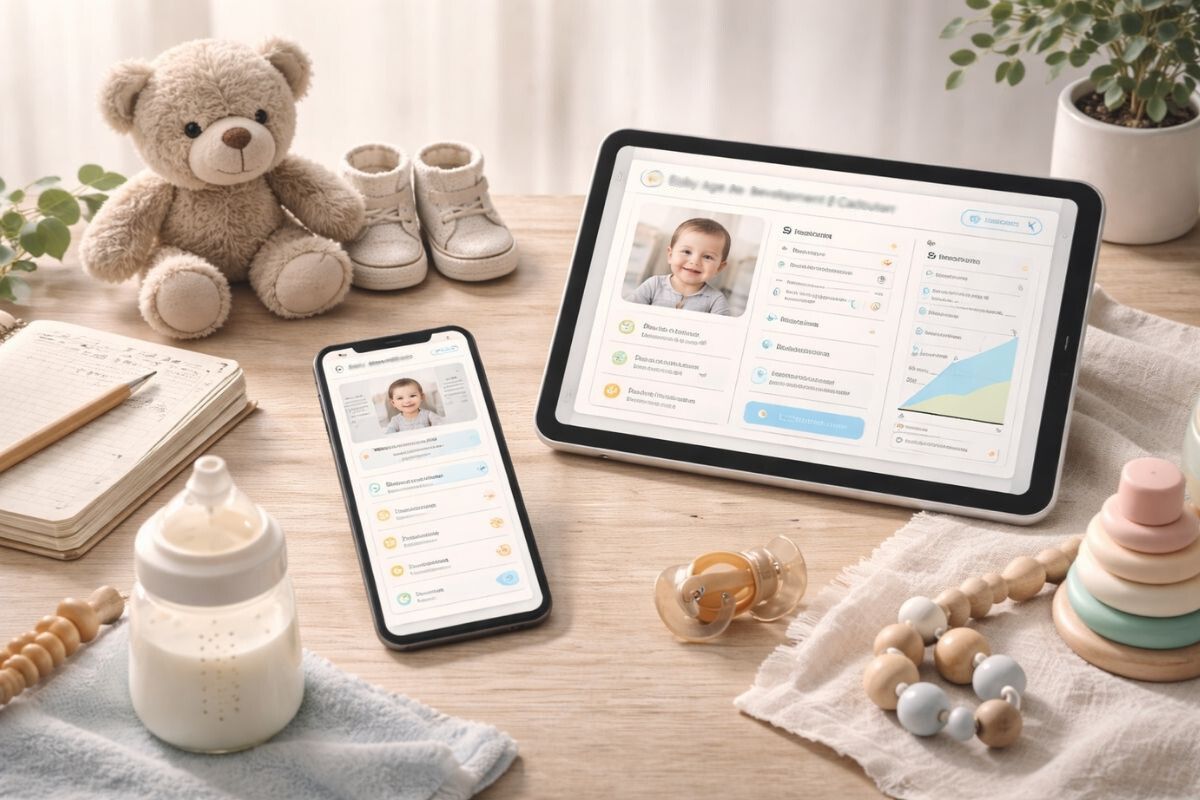
The first years with a baby feel fast and tender at the same time. Days blur together. Growth feels sudden. One week a sleeper fits, the next it does not. Parents want reassurance. They want clarity. They want tools that respect how children grow as individuals. Baby calculators have quietly become trusted companions in this journey. In 2026, they are smarter, gentler, and more aligned with child centered thinking than ever before.
As a writer for a research driven Montessori publication, I see these tools not as gadgets, but as bridges. They connect observation with understanding. They help parents pause and notice patterns. They turn numbers into insight. Used thoughtfully, they support curiosity instead of anxiety.
Quick Read
Baby calculators help parents track age, growth, body patterns, and developmental steps. In 2026, the best ones focus on context, not comparison. They guide observation, support healthy choices, and respect each child’s pace.
The Quiet Power of Baby Age Awareness
Age seems simple. Count the days. Count the months. Yet baby age is more nuanced than a calendar date. Weeks matter. Corrected age matters for babies born early. Developmental windows overlap. That is why age calculators designed for babies now go deeper than basic math.
Parents often notice behavior shifts and wonder if they align with age expectations. Sleep changes. Feeding rhythms adjust. Attention spans stretch. Using age aware tools helps parents frame these shifts as part of growth, not problems to fix.
Many parents pair age awareness with visual growth tracking. Tools like the baby growth chart calculator help turn age data into something you can see. Height and weight plotted over time tell a story. It is a story of steady progress, spurts, and pauses.
Growth Charts That Respect Individuality
Growth charts have been around for decades. What changed is how we use them. In the past, parents often felt pressure if a line dipped or rose sharply. In 2026, modern calculators frame growth as a range. A healthy range.
An infant growth chart calculator now allows parents to track patterns without panic. It highlights consistency rather than rank. It invites questions like, is my baby following their own curve?
This shift aligns closely with Montessori principles. Observation without judgment. Respect for natural variation. Trust in the child’s inner timetable.
| Metric | What it shows | Why it helps |
|---|---|---|
| Weight | Mass over time | Shows nutrition trends |
| Length | Linear growth | Tracks skeletal development |
| Head size | Brain growth | Supports early screening |
Milestones as Signposts, Not Finish Lines
Developmental milestones often cause mixed feelings. Pride. Worry. Comparison. The healthiest way to view milestones is as signposts. They point to skills that often emerge around a certain time, yet timing varies.
The developmental milestone tracker available today reflects this mindset. It encourages parents to log observations. It avoids alarmist language. It focuses on trends rather than single moments.
|
“Children reveal their development in layers. Tools should help us notice those layers, not rush through them.” |
Parents using milestone trackers often report feeling calmer. They notice progress that might have been missed. A longer gaze. A new sound. A shift in posture. These small changes matter.
Timely Reminders That Support Presence
Life with a baby is busy. Days fill quickly. Appointments, naps, feeds, and work blend together. Gentle reminders can help parents stay aware without adding pressure.
A first milestone reminder tool works best when it feels like a nudge, not a command. It suggests moments to observe. It invites reflection rather than action.
Parents often use reminders to pause and watch. To sit back during tummy time. To notice hand coordination. These moments build connection.
Understanding Body Patterns With Care
Body measurements can feel sensitive. Parents worry about weight, size, and proportions. In 2026, calculators approach these topics with more care.
The baby BMI calculator is a good example. It frames results within age appropriate context. It avoids adult assumptions. It encourages discussion with healthcare professionals rather than self judgment.
Used correctly, body pattern tools support nutrition choices and overall wellbeing. They are guides, not labels.
Five Ways Baby Calculators Support Mindful Parenting
- They slow down impulsive comparisons.
- They support observation over assumption.
- They turn data into visual stories.
- They prompt meaningful questions.
- They help parents trust their instincts.
Numbers Tell Stories When Context Leads
One. A number on a chart means little alone.
Two. A pattern across weeks carries meaning.
Three. Sudden changes invite curiosity.
Four. Consistency often signals wellbeing.
Five. Context shapes interpretation.
|
“Data becomes helpful only when paired with warmth, patience, and real life observation.” |
How Montessori Thinking Shapes Modern Tools
Montessori education emphasizes respect for the child. Observation. Prepared environments. Freedom within limits. These values now influence digital tools for parents.
Calculators designed with this philosophy avoid rigid expectations. They encourage parents to notice readiness. They support independence. They respect variability.
A milestone reached later is not a failure. A growth curve that looks different is not a flaw. Montessori aligned tools help parents hold this perspective.
Choosing Calculators that Feel Supportive
Parents often ask how to choose the right tools. The answer lies less in features and more in tone.
Look for language that feels calm. Look for visuals that show ranges. Look for explanations that invite learning.
Avoid tools that rank, score, or compare aggressively. They rarely support confidence.
A Future Shaped By Gentle Insight
Baby age and development calculators in 2026 reflect a cultural shift. Parents want understanding, not pressure. They want guidance, not judgment.
Used thoughtfully, these tools deepen connection. They help parents notice growth in all its forms. They support children as individuals with their own rhythms.
In that space between numbers and nurture, modern parenting finds its balance.